
U.S. Climate Politics
Climate change is recognized as having large effects on health and economic well-being. Peer-reviewed scientific studies show the impact of temperature/weather/pollution on mortality, GDP, health, crime, and civil conflict. Yet, according to a recent working paper series by Burke et al., adaptation to counteract the problem has been muted. “The climate change response has stalled. Are democracies equipped to handle this problem? asked Francesco Trebbi, Professor of Political Economics at the University of California, Berkeley School of Business. “Policies to curb the climate crisis, such as the carbon tax, are often democratically opposed. Are non-democracies like China better able to deal […]
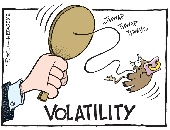
Carbon Price Volatility
Greenhouse gases generated by human activities are contributing to the problem of climate change. For those who care about mitigating extreme weather and wildfires, the key global policy objective of this decade is to reduce carbon emissions. One approach is the policy known as cap-and-trade, used by jurisdictions that create about 18 percent of global emissions. “Cap-and-trade” is shorthand for emissions trading, which is a market where regulators issue a limited number of emissions permits, and firms trade these permits among each other. But lately the markets have been volatile. How well do cap-and-trade systems function when the global markets […]
Fostering Clean Growth
To address environmental concerns, many governments impose pollution regulations on companies or firms. A key goal of such regulations is to spur the development of innovative clean technologies. Empirical evidence suggests that such strategies do, in fact, work. But how effective are regional regulations when dealing with multinational corporations in a globalized economy? “Environmental policies are often confined to local jurisdictions, whereas industrial production operates on a global scale. This mismatch poses a challenge for policymakers,” said Wei Xiang, Assistant Professor of Economics at the University of Michigan. “Firms, especially multinationals, can move their pollution-intensive operations to foreign jurisdictions. This […]
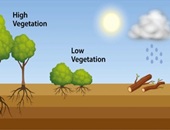
Credible Scenarios
What are the best practices for environmental and climate risk management in the financial sector? Are the standard input scenarios actually suitable for financial modeling? Economic scenarios are an essential tool in assessing the financial risks of the ever-changing world. Given that the average global temperature is increasing, and storms are becoming more severe, year over year, those who construct financial models of risk must set up new, realistic scenarios. Estimating gains and losses on portfolios is difficult because of the deep uncertainty of climate impacts, but modelers must start somewhere. “Using relevant scenarios is crucial,” said Irene Monasterolo, Professor […]
Adapting Agricultural Trade
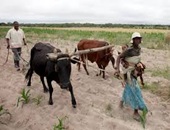
Climate change affects, and will continue to affect, agricultural productivity around the world. It is one of the inescapable ironies of our times that sub-Saharan Africa will be severely affected by climate change, despite how little it has contributed to global carbon emissions. How severe will these effects be? And is there any way to mitigate the effect on the most susceptible nations, besides curbing emissions, which appears to be a losing strategy? “Agriculture is a vulnerable sector because it is fed by rain and it is near the limits of thermal tolerance to begin with,” said Obie Porteous, Associate […]

What is the Cost of Biodiversity?
Biologists have long known that biodiversity is the key to nature’s resilience. In a biodiverse world, if the environment changes and some organisms can no longer thrive, others can take their place and fulfil functions that are essential to the species’ survival, and ultimately, human survival. Even the lowliest animals play significant roles, such as insects that pollinate—and a third of the food we eat depends crucially on insect pollinators. In addition to its intrinsic value, biodiversity underpins ecosystem services, providing the backbone of the global economy. Biodiversity loss, or the reduction in the genetic diversity of life forms, can […]

The Case for C.B.A.M.
In 2003, a devastating heat wave in Europe killed an estimated 70,000 Europeans, many of them elderly people living alone. This, and a series of other extreme weather events, have persuaded many countries to take climate change seriously. The European Union enacted the carbon border adjustment mechanism (CBAM). It came into effect as of October 1, 2023, and is designed to account for the carbon cost of producing imported goods, with the ultimate aim of reducing greenhouse gas emissions. “I’m a huge fan of CBAM,” Catherine Wolfram, professor of economics at MIT Sloan, said, joking that the name sounded like something […]
Green Supply Chain
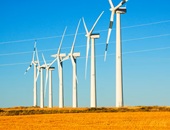
How sustainable is a consumer good, like a car? Looking back at the intermediate goods produced during the stages of getting to that final good, such as the motor to put into the car, how sustainably were those intermediates produced? Windmills are considered more environmentally friendly than gas power plants. But windmills require steel, which is a highly emission-intensive product. Hence, we also need to switch to environmentally friendly steel. This is but one example of “greening” the supply chain—how the green transition requires switching from fossil fuels to cleaner energy sources not just at the end, but all along […]
Energy transitions
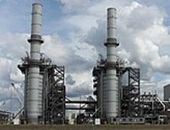
As the low-carbon energy transition takes hold, transition risk becomes a hot topic. Various uncertainties, mismatches, and potential obstacles emerge, threatening to delay the changeover. For example, in 2021, the U.K. had to restart coal-fired power plants due to low wind power. Two major transitions in electricity generation are underway. The cost of generating electricity with natural gas has dropped—and the costs of solar panels and energy storage have also dropped. Both are leading to new vistas in power generation. However, “over-investment in CCNG may affect the transition to renewables,” said Gautam Gowisankaram, professor of economics at Columbia University and […]
Distributional consequences
Climate change marches on. To prepare for worse storms, droughts, and wildfires, the infrastructure must be improved. Governments have different ways to handle the costs of adapting to climate change. How will these additional costs be borne? “Transition to a carbon-neutral economy is at the top of the policy agenda around the globe,” said Moritz Kuhn, professor of economics at the University of Mannheim. Private households account for about two-thirds of carbon emissions. “Governments can introduce policies to speed up the adoption of green technologies,” he said, but the heterogeneity of consumption and carbon emissions could present problems. These will […]