
What’s changing in relation to global energy supply and production? What are the latest trends in demand? And what do the changes mean for investment opportunity and risk?
These and other questions were addressed by David von Eiff, Director, Global Industry Standards at CFA Institute during a webinar on April 22, 2025, titled “Global Energy Transition: Investment Opportunity and Risks.”

Since the day marked the 55th anniversary of Earth Day celebrations, he began with a review of the goals of the zero emissions agreement. “There are health benefits to renewable energy and economic benefits.”
“In the U.S., renewables-based electrical generation could overtake coal-powered generation for the first time in 2026,” von Eiff said. “By 2029, electrical generation from solar is set to surpass hydropower.”
This year, the Earth Day organization is asking for a commitment to triple renewable power generation by 2030. He cited Uruguay as a world leader, getting 98 percent of its electricity from renewable sources. “India is aiming for 50 percent by the year 2030.”

“There is a path toward a more resilient global energy future based on renewable sources.” Moreover, this means a decrease in air pollution and a decrease in deaths due to asthma and heart attacks. He predicted fewer floods and heat waves as we move away from fossil fuels.
“Globally, in 2023, renewables supported 14 million jobs and generated $1.2 trillion USD,” von Eiff said. The renewable power sector means more innovation, employment and savings. It is set to grow about 17 percent annually until 2030.
Transition Risks
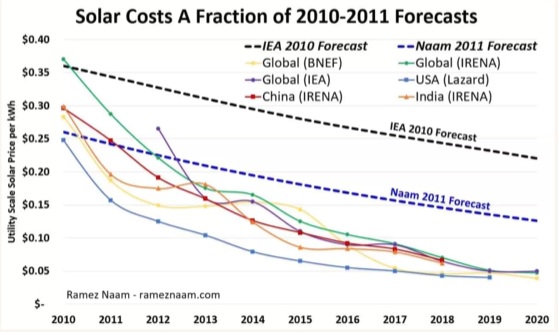
The good news has some downside, and that is due to the unanticipated success. The growth of U.S. solar manufacturing can’t keep pace with soaring demand. The International Energy Agency (IEA) “has consistently underestimated the speed of global solar capacity. Solar costs have been dropping,” he said. “As a result, [solar energy] entered the grid faster than expected. We didn’t have enough battery storage or other support systems to fully take advantage of it.”
For solar costs, von Eiff was quoting from Ramez-Naam’s chart that shows IEA, Bloomberg New Energy Finance (BNEF), International Renewable Energy Agency (IRENA), and Lazard estimates.
There are political and regulatory risks due to renewables coming on stream so fast.
Changing Demand
In 2024, global electricity consumption surged by just over 4 percent, and it is forecast to continue growing at this rate until 2027. China is about half of that growth in demand.
“Building and transportation industries are all using more power,” he noted, “alongside booming ownership of air conditioners, 5G rollouts, and the expansion of data centers.”
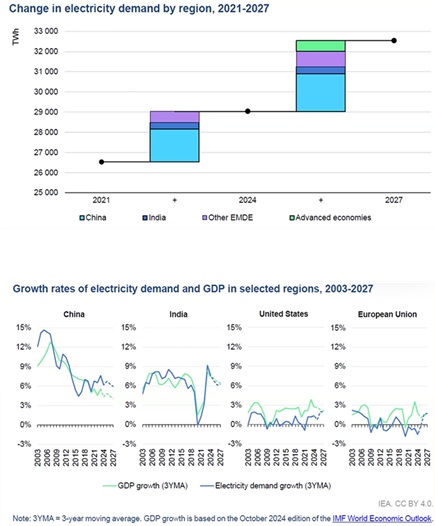
“Advanced economies are ramping up their power use,” he said. Data centers are increasing their energy consumption. More electrification of heating is occurring through heat pumps.
All this new demand is expected to be met by low emissions technology.
Africa is lagging behind. “They still do not have access to reliable electricity,” he said.
Growth rates of energy demand in China are using more energy per unit of GDP than ever before.
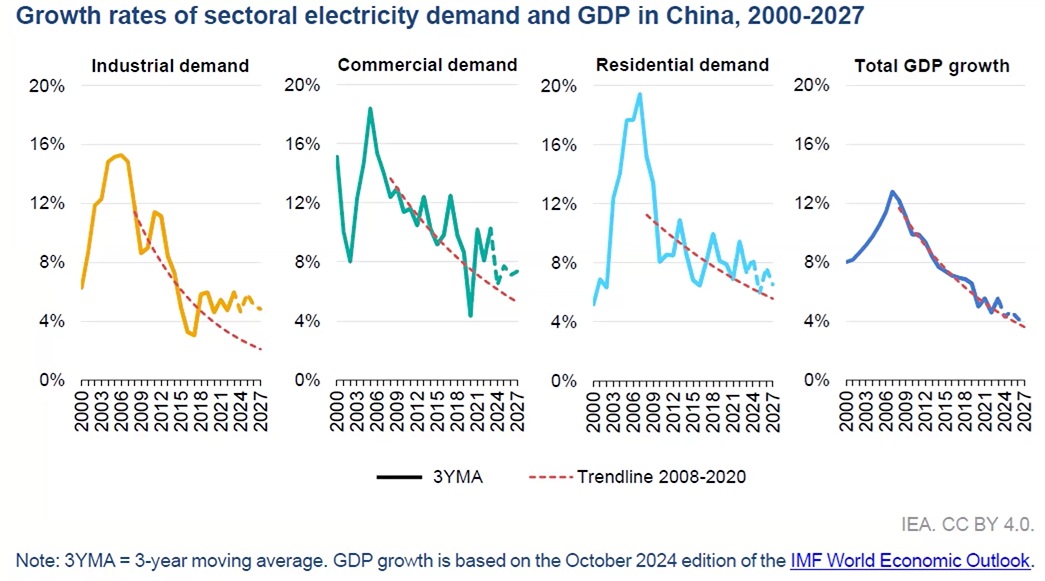
“Peak electrical loads have hit record highs,” von Eiff said, and listed some causes: rising air conditioner use by aging urban populations, growing use of electric mobility, and increasing digitalization.
Changing Supply
“Every additional terawatt hour of demand is expected to be met by low emission sources,” he said, “as we look at record high renewable and nuclear energy output.”
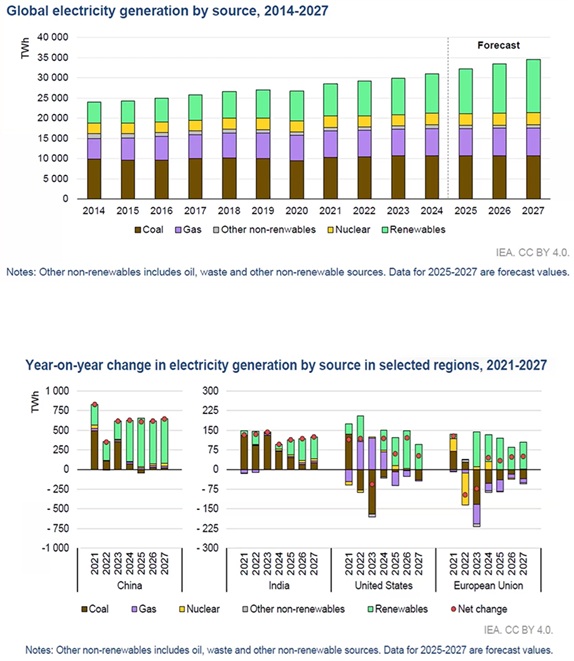
Coal’s share of global generation is expected to drop below 33 percent for the first time this century. Over the next three years, solar alone is expected to contribute about 600 terawatts of new generation each year.
Although the path ahead is bumpy due to unevenness in transition, it appears renewable energy is definitely on the upswing. There are many investment opportunities and risks as the world transitions to low-emission sources of power.
♠️