

With July being the most popular travel month, bigger credit card bills start coming due. Major financial institutions are using financial nudges, such as texts or emails, that encourage consumers to make their payments in a timely fashion.
But has anyone stopped to ask, “Do consumers like financial nudges?”
A recent research article surveyed over two thousand Australian bank customers to determine the level of sentiment. “People generally approve of financial interventions,” concluded the authors Merle van den Akker, behavioral scientist at Commonwealth Bank of Australia and Cass Sunstein, professor at Harvard Law School.
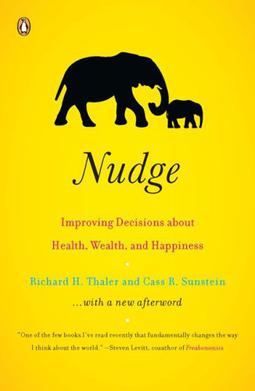
Professor Sunstein, along with Richard Thaler, co-authored the 2008 classic book, Nudge: Improving Decisions about Health, Wealth, and Happiness. A nudge, according to Thaler and Sunstein, is any form of design of decision-making environments that “alters people’s behavior in a predictable way without restricting options or significantly changing their economic incentives.” There is now a whole field of nudge theory.
The nudges were tested across “six dependent variables: approval, benefit, ethics, manipulation, the likelihood of use, as well as the likelihood of use if the intervention were to be proposed by a bank.”
For each type of message created, respondents were polled:
• ‘I approve of this intervention’
• ‘I see clear benefits to this intervention’
• ‘I find this intervention ethical’
• ‘I find this intervention manipulative’
• ‘I would make use of this intervention’
• ‘I would make use of this intervention if my bank were to apply this’
A secondary question was whether approval ratings were higher in particular groups.

The authors write, “Looking at demographics, we find that participants who were female, younger, living in metro areas and earning higher incomes were most likely to favor financial interventions, and this effect is especially strong for those aged under 45.”
In general, bank nudges that were transparent and provided a benefit to consumer, without a manipulative angle, were judged to be acceptable tools.♠️
Click here to read the article in the journal Judgment and Decision Making.