
Data Science 1. Trading Analytics
At the end of the day, what do you produce? If you are a knowledge worker, your “product” could be something as intangible and significant as decisions. That is the thinking behind the “decision factories” discussed in Roger Martin’s seminal Harvard Business Review article. If we labour in decision factories, then we are decision engineers, and our chief raw material is data, according to Nima Safaian, team lead for Trading Analytics at Cenovus Energy. “We need the capacity to produce many good decisions,” he said at the webinar on August 2, 2016, sponsored by the Global Association of Risk Professionals […]

“The Death of the Soul”
Do you long for the good old days? What, exactly, were “the good old days”? Depends on your time horizon. Today’s excerpt comes from page 11 of Economic Thought: A Brief History by Heinz D. Kurz, translated by Jeremiah Riemer (Columbia University Press, 2016). “According to Scholastic economic thought, the answer to the material hardship experienced by large segments of the [medieval European] population was not higher production and economic growth but self-restraint and the repression of needs. “The heart of Scholasticism was the doctrine concerning usury. A core argument was that money is sterile—it cannot “breed offspring.” Another argument […]

Robo-Advisors
What does the client want to see on the landing page of an automated wealth management website? Four panellists at the digital wealth management (a.k.a. robo-advisor) session of the Financial Technology conference held on June 17, 2016, had theories on how to connect with clients. The session was part of a one-day conference organized by the CFA Society Toronto and was held at the Toronto Board of Trade. Three of the panellists showed screen shots from their companies’ websites and spoke about underlying philosophies on client usage; the fourth panellist works for a company that provides “back end”, namely, the […]

Catch a Falling Knife. Part 2
Have you heard of “falling knife” securities? As the picturesque term suggests, buying into a market with strong downward momentum can be injurious to the portfolio. However, if timed correctly, just as the next upswing in prices begins, the purchase can be a clever way to buy underpriced stock. Nearly two years ago, oil & gas prices started falling, leading to a host of solvency issues for exploration & production (E&P) companies, also known as the upstream petroleum industry. Lending to companies within a distressed sector also is as tricky as catching a falling knife. However, there is a way […]

Catch a Falling Knife. Part 1
Who is taking advantage of the downturn in crude oil prices? “Most E&P assets are no longer economic to drill at today’s commodity prices,” said Curtis Flood, Vice President at the investment banking firm Evercore. He was the first of two speakers at a webinar “Catch a Falling Knife: Financial Repercussions of Current Crude Oil Prices” sponsored by the Global Association of Risk Professionals on June 7, 2016. (E&P refers to exploration & production, also known as the upstream petroleum industry.) The downturn in oil & gas prices is “the result of simple economics” caused by the “shale revolution” leading […]

Mega-Platforms, Mega Risk
There’s a world of difference between innovation and disruption. “Think of innovation as doing more, in the same old way,” said Haydn Shaughnessy, innovation specialist and author of Platform Disruption Wave: How the Platform Economy is Changing the World. He presented a GARP webinar on “The Rise of Mega-Platforms and the Risks to Banking” on May 25, 2016. In the first part of his talk, he described mega-platforms. He referred to the thesis of The Innovator’s Dilemma: When New Technologies Cause Great Firms to Fail by Clayton Christensen. This book argues that successful companies get so caught up in meeting […]

The Dawn of the Mega-Platform
Disruption of the financial sector is just on the horizon, says Haydn Shaughnessy, author and innovation specialist. He presented a webinar on “The Rise of Mega-Platforms and the Risks to Banking” to the Global Association of Risk Professionals (GARP) on May 25, 2016. His books include The Elastic Enterprise, Shift, and (most recently) Platform Disruption Wave. “What are the consequences of the disintegration of industry structures?” Shaughnessy asked. Most people see innovation as trying to get more of something that’s desirable, he said, but they might not understand clearly where they are headed. In short, what is the “big picture” […]
Fast Turnaround of Complex Math
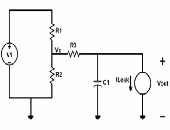
Imagine you are driving your brand-new mini-van, the latest Drake album cranked on high, the windshield wipers at top tempo, and the heater keeping things toasty. You go to switch the headlights to high-beam—and you are suddenly hit by the unmistakable odour of melting circuits…. Not a happy situation. It’s one that automotive designers the world over try to avoid by extensive testing of many different usage scenarios. Problem-solving tools have dramatically changed the way engineers advance their knowledge, for financial, automotive, chemical, and other sectors. Many products and technologies we take for granted—such as the electronic circuitry in a […]

Worst Case Analysis Made Easy
Can symbolic computing improve real-world design? Definitely yes, according to the product development team at the automotive firm Delphi. “Each time the circuits were changed, the electrical equations changed. We turned to symbolic computing so that we could quickly deal with design changes,” said Michael G. McDermott, Senior Development Engineer at Delphi. He was the second speaker in a webinar on May 25, 2016, titled “How Far Can Your Math Knowledge Go?” Lights, heating, movies for kids in the back to watch… Over time, vehicles have come to have more and more elaborate electronics. These can lead to unpredictable stresses […]

The Case for Symbolic Computing
Should you care about symbolic computing? If your work involves concepts that are expressed in math, and if you want to reduce errors and routine work, then Samir Khan says, yes, you should. Khan, Product Manager at Maplesoft, was the first speaker in a webinar on May 25, 2016, titled “How Far Can Your Math Knowledge Go?” “Symbolic computing allows you to automatically derive system equations using well-defined rules,” said Khan. “It allows you to mechanize your work with equations, such as the routine manipulations that are done in algebra.” The traditional design process means the designer (or engineer or […]