

Heat Shocks & Farm Size
In developing countries, many households, even those where adults work in non-agricultural sectors, depend on small farms for food and income. These farms operate at a lower rate of productivity, unable to benefit from economies of scale. Typically, these households are uninsured against negative income shocks. What happens, then, when weather shocks occur, such as heat waves or drought? Economic researchers recently studied the link between small farms and income shocks in Colombia, a country of 52 million, with one-tenth the land size of the U.S. “We found that temperature shocks increased the number of land sales and mortgages, with […]
Supply Chains & Climate Risk
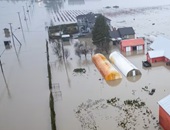
Supply chain disruptions during the pandemic made average citizens aware of how vulnerable supply chains are, and how severe the knock-on effects can be. Supply chains continue to be exposed to risk in many ways: geopolitics, labour, and weather, to name a few. In this month alone, floods and atmospheric rivers have caused major disruption of supply chains, such as can be seen in the December flooding in British Columbia’s Fraser Valley and Washington state. As companies continue to manage supply chains in the face of climate change, what are the trade-offs between cost minimization and resilience? What are the […]
U.S. Climate Politics
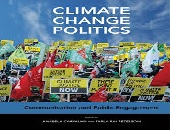
Climate change is recognized as having large effects on health and economic well-being. Peer-reviewed scientific studies show the impact of temperature/weather/pollution on mortality, GDP, health, crime, and civil conflict. Yet, according to a recent working paper series by Burke et al., adaptation to counteract the problem has been muted. “The climate change response has stalled. Are democracies equipped to handle this problem? asked Francesco Trebbi, Professor of Political Economics at the University of California, Berkeley School of Business. “Policies to curb the climate crisis, such as the carbon tax, are often democratically opposed. Are non-democracies like China better able to deal […]
Carbon Price Volatility
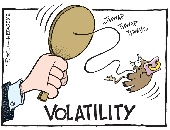
Greenhouse gases generated by human activities are contributing to the problem of climate change. For those who care about mitigating extreme weather and wildfires, the key global policy objective of this decade is to reduce carbon emissions. One approach is the policy known as cap-and-trade, used by jurisdictions that create about 18 percent of global emissions. “Cap-and-trade” is shorthand for emissions trading, which is a market where regulators issue a limited number of emissions permits, and firms trade these permits among each other. But lately the markets have been volatile. How well do cap-and-trade systems function when the global markets […]

Fostering Clean Growth
To address environmental concerns, many governments impose pollution regulations on companies or firms. A key goal of such regulations is to spur the development of innovative clean technologies. Empirical evidence suggests that such strategies do, in fact, work. But how effective are regional regulations when dealing with multinational corporations in a globalized economy? “Environmental policies are often confined to local jurisdictions, whereas industrial production operates on a global scale. This mismatch poses a challenge for policymakers,” said Wei Xiang, Assistant Professor of Economics at the University of Michigan. “Firms, especially multinationals, can move their pollution-intensive operations to foreign jurisdictions. This […]

Adapting Agricultural Trade
Climate change affects, and will continue to affect, agricultural productivity around the world. It is one of the inescapable ironies of our times that sub-Saharan Africa will be severely affected by climate change, despite how little it has contributed to global carbon emissions. How severe will these effects be? And is there any way to mitigate the effect on the most susceptible nations, besides curbing emissions, which appears to be a losing strategy? “Agriculture is a vulnerable sector because it is fed by rain and it is near the limits of thermal tolerance to begin with,” said Obie Porteous, Associate […]

Do People Like Nudges?
With July being the most popular travel month, bigger credit card bills start coming due. Major financial institutions are using financial nudges, such as texts or emails, that encourage consumers to make their payments in a timely fashion. But has anyone stopped to ask, “Do consumers like financial nudges?” A recent research article surveyed over two thousand Australian bank customers to determine the level of sentiment. “People generally approve of financial interventions,” concluded the authors Merle van den Akker, behavioral scientist at Commonwealth Bank of Australia and Cass Sunstein, professor at Harvard Law School. Professor Sunstein, along with Richard Thaler, […]

A Storied Career
How is asset management evolving? What forces are re-shaping the financial industry? And what lessons were learned over the career path of one financial wizard? On June 23, 2025, the CFA Institute released the video of a far-reaching interview with Kenneth Blay, Head of Research, Global Thought Leadership at investment management company Invesco. “I started ‘in the dregs’ as a stockbroker,” Blay reminisced, “cold calling and pitching stocks before moving into research.” He noticed he was giving different recommendations for portfolios than his colleagues were, and he wondered why that wasn’t explored more systematically. Later, with Nobel laureate Harry Markowitz, Blay did […]
A Defining Moment
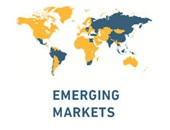
Investing in emerging markets amid today’s complex global landscape presents both opportunities and risks. Can investors identify markets with a strong potential for risk-adjusted returns? Can they avoid the worst of the pitfalls? In a webinar on March 19, 2025, three experts in the field presented a round-table discussion titled “Capital Flows, Tariffs & Trade: A Defining Moment for Emerging Markets Investors.” They touched on issues as wide-ranging as exchange rates, geopolitical risk, and trade barriers that will be discussed more fully at the upcoming conference, CFA Institute LIVE 2025 to be held in Chicago, 4-7 May, 2025. The panel […]

Finance and AI
Artificial intelligence is transforming the fields of investment and asset management. Finance professionals must learn how to leverage predictive analytics and machine learning in order to maintain a competitive edge in the new AI-driven financial landscape. In a webinar on February 26, 2025, two experts in the field presented a round-table discussion titled “AI Tools and Techniques: Revolutionizing Investment and Asset Management in 2025.” They touched on issues that will be discussed more fully at the upcoming conference, CFA Institute LIVE 2025 to be held in Chicago, 4-7 May, 2025. The panel moderator, Brian Pisaneschi, [center photo] is an affiliate […]