

How is asset management evolving? What forces are re-shaping the financial industry? And what lessons were learned over the career path of one financial wizard?
On June 23, 2025, the CFA Institute released the video of a far-reaching interview with Kenneth Blay, Head of Research, Global Thought Leadership at investment management company Invesco.
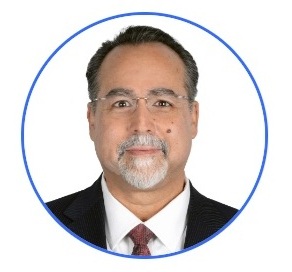
“I started ‘in the dregs’ as a stockbroker,” Blay reminisced, “cold calling and pitching stocks before moving into research.” He noticed he was giving different recommendations for portfolios than his colleagues were, and he wondered why that wasn’t explored more systematically.
Later, with Nobel laureate Harry Markowitz, Blay did research on tax-cognizant portfolio analysis, among other topics. “I did everything using Visual Basic and Excel,” he said. “With Harry, the most important thing I learned was how to take research from ideation to prototype.”
Blay was being interviewed by renowned economist and professor Frank Fabozzi, the author of classic textbooks in investment management and financial econometrics such as The Handbook of Fixed Income Securities, currently in its ninth edition.

Blay identified three main avenues of financial research: business needs; enhancement of existing investment product; and “dream projects” such as environmental, social, and governance (ESG) investing. He tries to be pragmatic and systematic. “A lot of people are doing ESG. You have to be able to monitor your goal.” He and collaborator Stephen Horan, from the Certified Financial Planner Board of Standards, proposed a standard framework for doing so: ESG Investment Outcomes, Performance Evaluation, and Attribution.
Fabozzi raised a question about the use of artificial intelligence in finance. Blay said it facilitates work such as coding. Another key area is using AI to produce commentary on financial markets. “That really cuts down the required time. But,” he cautioned, “we need to understand the privacy aspects.”
Fabozzi asked what type of challenges arise when preparing articles for publication.
Blay listed four types of content: market commentary, asset class commentary, investment approach, and combinations thereof. “The shelf life needs to be long so you can write about it in an academic journal. You must be able to discern which ideas have a long shelf life.”
Blay hopes research gets engagement with clients, so both parties can “continue an ongoing conversation. And so they can understand how we measure success.”
“My problem is dealing with legal and compliance,” Fabozzi said. These departments must be dealt with before publication of a paper and the requisite paperwork can be long and onerous. “If something smells like marketing, we flush it right away.”
Blay described the work behind the paper titled “Beyond Active and Passive Investing: The Customization of Finance.” The article is available as a CFAI monograph, coauthored with finance professor and author Marc R. Reinganum.
The article contains an overview of the 1989-2021 evolution of investment patterns in the U.S., Europe and the rest of the world. “You had the greatest growth in passive investing,” Blay said, “and it basically became U.S. large cap blend. Anytime you used value and growth, they had to be actively managed. Smart beta started making inroads into the enhanced space. “You will see inroads into the passive space.”
“Wells Fargo was the first to start an index fund,” Blay said, “and after that came Jack Bogle and Vanguard. Now we see portfolios as a service.”
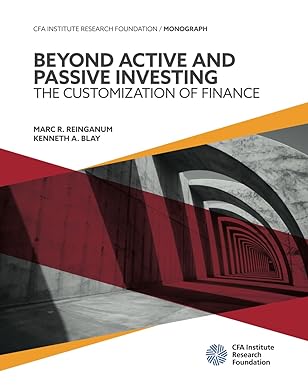 Blay’s co-author Reinganum started in academics, then moved to active investing. In the beginning of the stock market, what allowed advancement was pooling. “In the 1700s, pooled assets started. In 1924, they invented open-end funds and in the late 1990s we had exchange-traded funds (ETFs) arise. Along the way, a lot of infrastructure and know-how developed and now we are moving into active ETFs. You can start customizing passive products—and that makes them active.”
As an example, he cited the need to de-pool in order to get certain tax benefits. “That is active investing.”
The future of active investing is a change from product to providing a service. “Extroverted quants will be in high demand,” Blay said, referring to people who understand quantitative analysis and can explain it to customers.
“Pooling allows for scale. Infrastructure costs, tech costs, and human capital, they all add up,” Blay said. “Customization is active management even if we are using passive products.”
Fabozzi asked about Blay’s work with famed economist Harry Markowitz. “He appreciated judgement and approximation,” Blay replied. “In many problems, precision is useless. You don’t need to take correlation to the fifth decimal place.”
Markowitz also believed in developing intuition, Blay said. “It’s important to know, what do I believe about something? What are your priors? Markowitz emphasized that sometimes you just have to sit and think, or in Markowitz’s case, he liked going for a walk and doing his thinking then.”
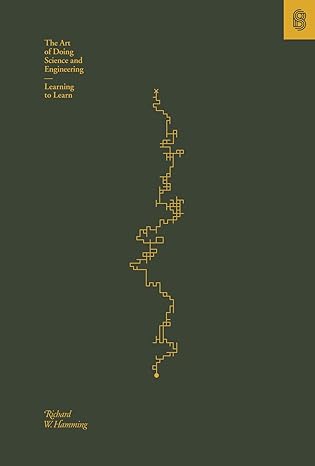
“Markowitz said be kind and have fun exploring ideas with people. There are people who understand things much better than you do. Every week he would spend a day reading something that was not about finance.” Blay recommended the book The Art of Doing Science and Engineering: Learning to Learn by mathematician Richard Hamming.
 “I never had a one-hour call with Markowitz,” Blay reminisced. “It was always two to four hours. We would be laughing and chatting, even singing show tunes. That’s how much fun our calls were.”
Fabozzi said, “This year is the 80th anniversary of the Financial Analyst Journal” and this brought some associations mind.
“The FAJ is the single most important repository of ideas,” Blay said. “It helped me write Beyond Active and Passive Investing. The original research began with two papers published in 1960 in the FAJ. Their pages are also a site of arguments. The importance of asset allocation: that was an argument going back and forth over several years.”
The journal is still very active and influential today. ♠️
Click here to watch the one-hour interview with Frank Fabozzi and Kenneth Blay.
Click here to access the list of interviews, “Conversations with Frank Fabozzi, CFA, Video Series.”
Click here to access the standard framework co-authored by Kenneth Blay: ESG Investment Outcomes, Performance Evaluation, and Attribution.