
Green Supply Chain
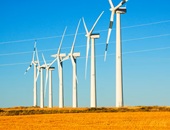
How sustainable is a consumer good, like a car? Looking back at the intermediate goods produced during the stages of getting to that final good, such as the motor to put into the car, how sustainably were those intermediates produced? Windmills are considered more environmentally friendly than gas power plants. But windmills require steel, which is a highly emission-intensive product. Hence, we also need to switch to environmentally friendly steel. This is but one example of “greening” the supply chain—how the green transition requires switching from fossil fuels to cleaner energy sources not just at the end, but all along […]
Energy transitions
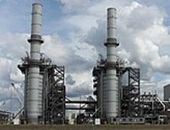
As the low-carbon energy transition takes hold, transition risk becomes a hot topic. Various uncertainties, mismatches, and potential obstacles emerge, threatening to delay the changeover. For example, in 2021, the U.K. had to restart coal-fired power plants due to low wind power. Two major transitions in electricity generation are underway. The cost of generating electricity with natural gas has dropped—and the costs of solar panels and energy storage have also dropped. Both are leading to new vistas in power generation. However, “over-investment in CCNG may affect the transition to renewables,” said Gautam Gowisankaram, professor of economics at Columbia University and […]
Investing? Climate Matters
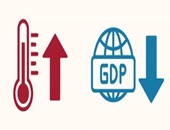
How will climate change affect investment decisions, going forward? Are investment professionals well informed on climate risk and transition risk? “Around the world, nations are committing to net-zero emissions targets of greenhouse gases,” said Richard MacGillivray, Senior Director at CFA Institute. “What are the implications of these commitments for the value and performance of companies in the real economy?” The 2024 Global Risks Report tabled by the World Economic Forum (WEF) polled risk managers on the biggest global threat to sustainability. Over the next two years, respondents said the top risk is misinformation and disinformation. However, over the next ten […]
Decarb Economics 101
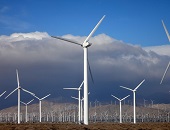
To mitigate the consequences of climate change, the world requires international coordination. In 2015, the Paris Agreement was signed by 195 nations. Its long-term temperature goal is to keep the rise in mean global temperature to well below 2°C (3.6 °F) above pre-industrial levels, and preferably limit the increase to 1.5 °C (2.7 °F), which would reduce the worst effects of climate change. Many countries are developing policies to get themselves on a path toward achieving the agreed-upon 1.5 °C goal. Although present progress may seem piecemeal, in the words of a Chinese proverb, “A great journey begins with a single step.” The figure below […]
World Energy Outlook
On October 24, 2023, the International Energy Agency (IEA) released its annual report, World Energy Outlook (WEO), to an international audience. The agency states that the energy world “remains fragile but has effective ways to improve energy security and tackle emissions.” Agency analysts looked at how close the countries of the world are to meeting the objectives of the Net Zero Emissions by 2050 (NZE) Scenario, which limits global warming to 1.5 °C, a goal signed by many countries and often referred to as the Paris Agreement. [As of March 2021, 194 states and the European Union have signed the […]