
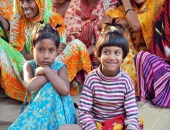
The first and most prominent of the United Nations’ Sustainable Development Goals is “to end poverty in all its forms, everywhere, and leave no one behind.” Instead, reports shows that climate risk disproportionately affects poor countries, particularly in sub-Saharan Africa and Asia, which are projected to experience many more heat-related deaths as the average global temperature climbs.
Yet the developed world becomes further enmeshed in geopolitical conflicts and ignores what is happening to the environment.
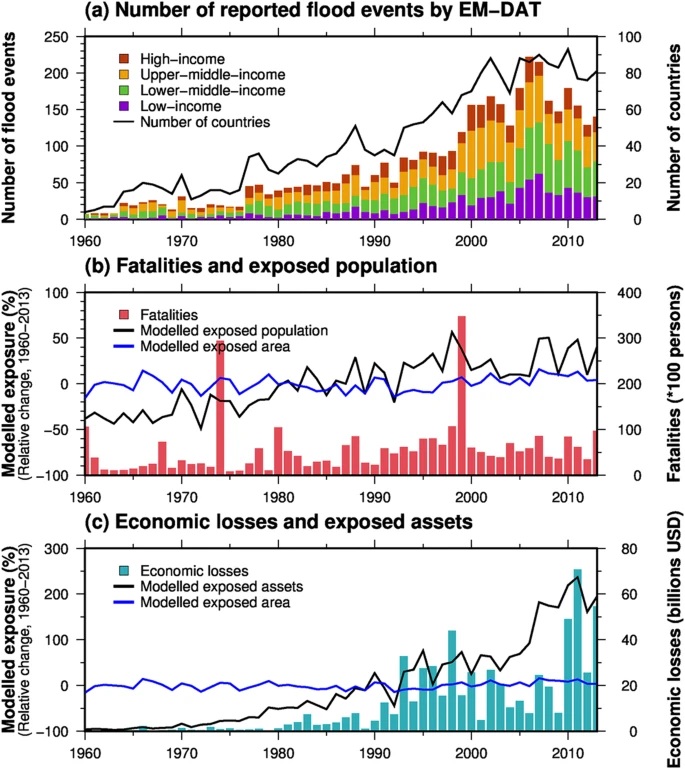
“Climate risk is rising, with the world becoming hotter and weather shocks such as flood and drought increasing in number and severity,” said Clare Balboni, professor of economics at the London School of Economics (LSE). “This is occurring especially in countries where the poorest live.”
She was presenting the webinar “Weathering Poverty” on March 19, 2026, as part of the Virtual Seminar on Climate Economics (VSCE), a series organized by the Europe-based Centre for Economic Policy Research (CEPR).
Balboni’s research focuses on mechanisms that link individual poverty to climate vulnerability. “This is key to understanding how poverty undermines the ability to avert and recover from shocks.”

A secondary question arising from her work is: how can anti-poverty programs be made more effective in the face of climate change?
Approach
Her research group combined high-resolution satellite data measuring drought and flood conditions with the household panel data (longitudinal, from selected households) from Bangladesh, a nation of 174 million people, with per capita GDP of about $3,000.
The researchers wanted to test how resilience to weather shocks is affected by a “big push” asset transfer program. In such a program, a poor household receives productive assets, such as livestock, tools, and/or seeds, to kickstart income-generating activities. Analysis of data from such a program would enable economists to isolate the predictable and unpredictable components of weather shocks.
They examined the role of investment, occupational choice, and labour markets as mechanisms to mitigate shocks.
The Bangladesh Rural Advancement Committee (BRAC) is a nonprofit organization developed to promote agricultural reform and educational training. BRAC operates an asset transfer program, the flagship Ultra-Poor Graduation (UPG) program, also known simply as the Graduation program. This targets the most destitute households across 42 districts, focusing on areas with deep poverty, particularly in the northwest. The Graduation program selects villages via participatory wealth ranking, where residents identify the ultra-poor, and has successfully empowered over 2 million households to escape extreme poverty.
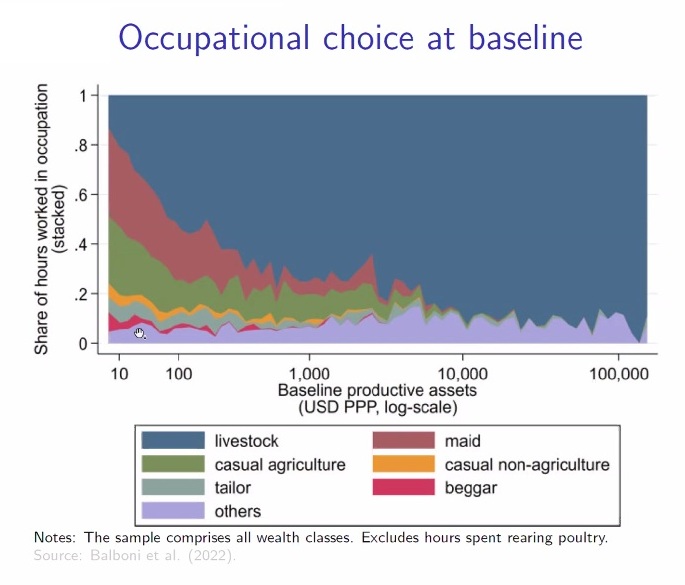
For this specific study, the researchers chose a subgroup of 23,000 households in 1,309 villages in 13 poorest districts. Of these, 6,000 households were considered “extremely poor.” The baseline survey before intervention was conducted in 2007. The most common occupations listed for them were “maid” and “casual agriculture.”
In climatology and agriculture, time is measured in a dekad, which is a 10-day period used to divide months for data analysis. There are multiple ways to model extreme weather based on past data. “The preferred approach,” Balboni said, “models dekad-level baseline risk as an exponential decay model then sums the deviations across dekads over the year.”
Results
Balboni’s research showed that “unpredictable weather shocks have substantial negative consumption impacts.” The Graduation program was “effective in ameliorating these impacts almost fully.”
The success was “underpinned by the [household’s] ability to maintain and diversify productive assets and occupations.” It was not driven by selling off the productive assets. Instead, the recipients chose to retain their livestock and tools.
Participants in the Graduation program relied more on resilient income sources while their income from less resilient sources such as casual agriculture was also protected.
The researchers found “increases in labour supply elasticity limits landlords’ ability to shift shocks on workers,” meaning that demand for housing would not lead to a huge spike in rents.
Balboni’s work shows that those lifted out of poverty by the BRAC’s Graduation program do not reduce consumption. The “lift” is sustainable because it is achieved by diversifying labor activities rather than divesting assets. Programs that diversify income-generating activities are thus a reasonable way to enhance the climate resilience of the extreme poor. ♠️
The graph of global flood exposure and economic losses is from Scientific Reports. Tanoue, M., Hirabayashi, Y. & Ikeuchi, H. Global-scale river flood vulnerability in the last 50 years. Sci Rep 6, 36021 (2016). https://doi.org/10.1038/srep36021
“Weathering Poverty” is a joint research project between Clare Balboni (LSE), Robin Burgess (LSE), Anton Heil (LSE), Clement Mazet-Sonilhac (Bocconi), Munshi Sulaiman (BRAC), and Yifan Wang (LSE).
Click here to access the website of the Bangladesh Rural Advancement Committee (BRAC). This is the source of the thumbnail image. Permission pending.