
Carbon Price Volatility
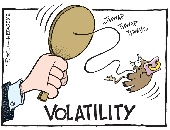
Greenhouse gases generated by human activities are contributing to the problem of climate change. For those who care about mitigating extreme weather and wildfires, the key global policy objective of this decade is to reduce carbon emissions. One approach is the policy known as cap-and-trade, used by jurisdictions that create about 18 percent of global emissions. “Cap-and-trade” is shorthand for emissions trading, which is a market where regulators issue a limited number of emissions permits, and firms trade these permits among each other. But lately the markets have been volatile. How well do cap-and-trade systems function when the global markets […]

A Storied Career
How is asset management evolving? What forces are re-shaping the financial industry? And what lessons were learned over the career path of one financial wizard? On June 23, 2025, the CFA Institute released the video of a far-reaching interview with Kenneth Blay, Head of Research, Global Thought Leadership at investment management company Invesco. “I started ‘in the dregs’ as a stockbroker,” Blay reminisced, “cold calling and pitching stocks before moving into research.” He noticed he was giving different recommendations for portfolios than his colleagues were, and he wondered why that wasn’t explored more systematically. Later, with Nobel laureate Harry Markowitz, Blay did […]
A Defining Moment
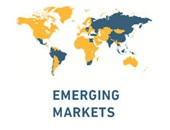
Investing in emerging markets amid today’s complex global landscape presents both opportunities and risks. Can investors identify markets with a strong potential for risk-adjusted returns? Can they avoid the worst of the pitfalls? In a webinar on March 19, 2025, three experts in the field presented a round-table discussion titled “Capital Flows, Tariffs & Trade: A Defining Moment for Emerging Markets Investors.” They touched on issues as wide-ranging as exchange rates, geopolitical risk, and trade barriers that will be discussed more fully at the upcoming conference, CFA Institute LIVE 2025 to be held in Chicago, 4-7 May, 2025. The panel […]

The Cost of Sustainability
It seems not a newscast goes by without mention of carbon taxes, or emissions trading, or severe weather events. As wildfire season ramps up, the benefits to switching to renewable energy are apparent. Gradually—some might say too gradually—climate policy (both to mitigate and adapt to changing conditions) is being implemented. New measures chiefly target industry sectors that have the greatest carbon emissions, such as fossil fuels, agriculture, and fashion. But how does sustainability affect the cost of capital, in other words, the minimum rate of return a company must earn before generating value? “There’s plentiful research on the benefits,” said […]

Geopolitical Risks
Many conflicts and potential conflicts disturb various parts of the world in the post-pandemic era. For those who must manage various sources of risk in a portfolio, what are the biggest threats on the horizon? Is there a common thread among several sources of conflict? The Global Association of Risk Professionals (GARP) provides a series of podcasts featuring specialists discussing their area of risk and we at TextMedic enjoy listening in. This is the first podcast we have summarized in our blog, and for starters we delve into country risk. On April 14, 2024, Daniel Wagner, CEO of Country Risk […]

Why Don’t ESG Ratings Agree?
ESG (environmental, social, and governance) investing has become a popular choice for many investors. But how reliable are the ratings of the agencies that evaluate stocks for their ESG performance? What kind of discrepancies or “ESG noise” is found among such ratings, and can this be reduced? On October 5, 2023, Roberto Rigobon, assistant professor at the Sloan School of Management at Massachusetts Institute of Technology (MIT), posed these questions during a webinar was part of the series of talks sponsored by the Federal Reserve Bank of San Francisco (FRBSF), titled the Virtual Seminar on Climate Economics. His webinar was […]

The Greenium
Does the average household want to invest in climate-friendly assets? If so, what proportion of assets are earmarked for green investments? What kinds of assets (equity or fixed income) are preferred? “Green investments are popular, but only about one-third of German households have some kind of green account,” said Monika Piazzesi, Professor of Economics at Stanford University. She was speaking at a webinar titled “Household Climate Finance: Theory and Survey Data on Safe and Risky Green Assets,” held on September 7, 2023, as part of the Virtual Seminar on Climate Economics sponsored by the Federal Reserve Bank of San Francisco (FRBSF). Her […]

Green Stocks vs. Brown
Comparing the stock prices of climate-friendly (“green”) companies versus non-climate-friendly (“brown”) companies, which type will give better performance? Has this prediction been changing over the past decade—and why? And what are the recent pressures? On March 23, 2023, Michael Bauer, professor of economics at the University of Hamburg, delivered a webinar on green vs. brown stocks as part of the series of talks sponsored by the Federal Reserve Bank of San Francisco (FRBSF), titled the Virtual Seminar on Climate Economics. He reported results from a recent paper co-authored with three other economists appearing in the Journal of Climate Finance. Bauer […]

Steering the Ship
“Board involvement is pivotal… It’s so much easier to get climate risk capability embedded,” said Jo Paisley, President of the Global Association of Risk Professionals (GARP). “Our survey found the vast majority of boards have oversight of climate-related risks and opportunities.” She was referring to the report titled Third Annual Global Survey of Climate Risk Management at Financial Firms available from the GARP website since September 2021. Paisley and two other panel members were part of the July 12, 2022, webinar to mark the publication of a joint report from GARP and the United Nations Environment Programme Finance Initiative (UNEP FI). […]

Towards a Common Standard
Investors around the world are demanding consistent, high-quality reporting of environmental, social, and governance (ESG) data. Is there any global governing body for financial reporting that is up to the task? How can an organization ensure that sustainability reporting is comparable, consistent, and comprehensive? Furthermore, is the input from financial professionals welcomed? The answer, apparently, is “yes” on all three counts. On June 21, 2022, Josina Kamerling, member of the Value Reporting Foundation and the CFA Institute, welcomed an audience of hundreds to a webinar titled “Endgame: Will the ISSB become the comprehensive global baseline for sustainability disclosure?” She introduced the representative […]