

Top 5 Trends in Risk Management
The champagne has been drunk, and the New Year has been rung in. What trends are predicted in risk management as we welcome the new decade? “In 2020, we’ll likely see significant changes in risk models, processes and functions,” predicts Brenda Boultwood, Risk Advisory Partner at Deloitte. As a senior expert in risk culture and corporate governance, she published an article online January 10, 2020, for the Global Association of Risk Professionals (GARP). We present the highlights and a link to the full article below. The three lines of defense business model, as we know it, will end This is actually […]

Machine learning sniffs out corruption
“Bribery and corruption are by-products of risk culture,” said Aparna Gupta, Associate Professor at Lally School of Management at Rensselaer Polytechnic Institute. “We can take a step back and devise methods to detect it using textual data and machine learning.” Gupta was the second of two speakers at the one-hour webinar “Corruption and Corporate Governance” sponsored by the Global Association of Risk Professionals (GARP) on October 30, 2019. Since culture is intangible, empirical work on the relation between risk culture and risk management is limited. Traditional approaches for assessing risk culture have many drawbacks such as bias and lack of comparability. Nonetheless, […]

Finding a New Balance
How can monetary policy achieve price stability and full employment objectives in the midst of a changing economic environment? Lately, the US Federal Reserve Bank (FRB) has been thinking hard about new ways to control inflation, given the new economic headwinds. “Persistently low inflation presents a new problem for monetary policymakers,” said Mary C. Daly, president and CEO of the Federal Reserve Bank of San Francisco (FRBSF). On August 29, 2019, she gave a speech to a conference of economists and policymakers in Wellington, NZ. This was a significant venue, because inflation targeting was pioneered in New Zealand in 1990, […]
The Big Question
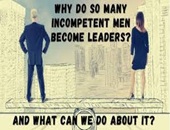
“Look around your office. Turn on the TV. Incompetent leadership is everywhere, and there’s no denying that most of these leaders are men,” reads the provocative blurb on a new book about leadership. Released this month in hardcover by Harvard Business Review Press, the book Why Do So Many Incompetent Men Become Leaders?: (And How to Fix It), Tomas Chamorro-Premuzic asks two powerful questions: Why is it so easy for incompetent men to become leaders? And why is it so hard for competent people–especially competent women–to advance? Marshaling decades of rigorous research, Chamorro-Premuzic points out that although men make up a […]

Barcodes of Finance 4
7. Will blockchain technology affect the drive toward barcodes? It most definitely should—and in a positive way. The maintenance of a distributed database of identifiers, both for participants and products traded throughout the global financial supply chain is the easiest global blockchain infrastructure application to be developed. A global database of all the world’s participant and product identifiers, maybe a half billion records, is limited in scale, both as to data recorded in its distributed ledger and in its limits of processing speed—seconds required, at the most. Both parameters of speed and scale are well within the boundaries of current […]

Barcodes of Finance 3
5. Great, the G20 set up the Financial Stability Board to set things straight. So, what’s the problem? It was thought by all that “regulatory compulsion” at such a global level, overseen by the world’s most prominent collection of leaders of the largest economies, would finally solve the collective action problem that stymied the industry from doing this on their own. Industry members could not justify stepping aside from each firm’s own self-interest in maintaining the status quo. It would be costly to re-engineer legacy systems built in convoluted increments over the previous six decades. Everyone without exception wanted to […]
Barcodes of Finance 2
3. What allowed non-standard transaction date to persist and what was your response? I had spent my whole career in various sectors of finance and as an advisor to many financial institutions as a consulting Partner with PwC, responsible for the Financial Services sector. I saw the same sets of transaction data described differently in each firm, even though they would need to match perfectly between firms in order to confirm the transaction with the counterparty and either receive payment or pay for it. This disorder was managed by delaying the payment until all the details were reconciled, first by […]

Barcodes of Finance 1
After the holidays, Morty was bragging he’d been out to a new, very swanky seafood restaurant. “The maître d’ said they’re planning to bring in seafood barcodes.” I immediately pictured a slab of fish on Styrofoam with the price barcode sticker on it—straight from my local supermarket. “And this is at a high-end place?” I said skeptically. “Yeah, but it’s an identifier code, not a price sticker. It’s so the customer can verify they’re getting what they’re paying for,” he said. “Apparently there’s a big push to identify species, and make the information available.” Talking about fish barcodes reminded me […]

Wanted: Business Expertise
Artificial intelligence can be expensive and tricky to implement. Is it worth the trouble? Two organizations recently decided to pose the question to those who were working in financial institutions. “Due to budget constraints, a company might not always be able to apply artificial intelligence. But, to those who can, the benefits have become clear,” said Mahdi Amri, Partner and National AI Services Leader, Canada at Omnia, which is the artificial intelligence practice at Deloitte. On January 24, 2019, Amri was the second of two panellists who discussed early results of a joint survey by SAS and the Global Association […]

Operationalizing A.I.
How pervasive is the use of artificial intelligence in the field of financial risk management? What are the key challenges in AI implementation over the next two to three years? These issues were examined in early 2019 via the webinar, Operationalizing AI and Risk in Banking, sponsored by the Global Association of Risk Professionals (GARP). “We found exceptionally high rates of AI usage among survey respondents,” said Katherine Taylor, Senior Data Scientist at the software company SAS. On January 24, 2019, Taylor was the first of two panellists who presented a “sneak peek” at a joint survey by SAS and […]